
4 Amortization vs. Depreciation: Whats the Difference?

That means in 2022 your company had $13,500 in sales, and in 2023 you have $45,000 in sales. Once an asset is fully amortized, there’s typically no resale or salvage value of the asset. Remember, when you’re uncertain about these calculations or their tax implications, reaching out to an accounting professional is a wise decision to ensure compliance and precision. For example, a company that acquires a copyright for a book for $100,000 with an expected useful life of 15 years would amortize this asset at $6,667 per year. Consider a company that purchases equipment for $50,000 with an expected Accounting Periods and Methods lifespan of 10 years and a salvage value of $5,000. In the early stages of an amortizing loan, a larger portion of the payment goes toward interest.

Loan amortization schedule template
- This depreciation class is under assets subject to depreciation, and it shows in the balance sheet as the net depreciable asset together with the depreciation sum account.
- Accurate amortization schedules provide clarity on the financial projections and profitability of the projects or assets underpinned by the intangible item.
- This approach helps businesses and individuals manage loans, investments and financial statements more effectively.
- This method involves the calculation of the annual amount by which the asset is depreciated and then making subsequent summation until the amount corresponds to the original of the depreciated asset.
- Running a business is no small feat and companies need both tangible and intangible assets to operate and drive profitability.
- This accounting method ensures that the amortization expense would realistically reflect the usage of the intangible asset.
- The declining balance method calculates depreciation faster than the straight-line method, meaning that a higher percentage of the asset’s value is depreciated in the early years of its useful life.
The straight-line method is typically used for calculating amortization. This method records the same amount of amortization each year over the asset’s useful life. The amount of depreciation to be charged is determined with reference to the useful life of an asset. Suppose a company purchased a vehicle for $100,000 with an expected useful life of about five years. The company should have a yearly accelerated depreciation value of $20,000 for the next five years.
How Do I Know Whether to Amortize or Depreciate an Asset?

Capitalization, which is used to reflect the long-term value of an asset, is the process of recording an expense as an asset on the balance sheet versus as an expense on the income statement. Business clients need a lot of assets to run their company and they turn to you for help in ensuring tax compliance and to mitigate their tax liabilities when acquiring property. However, Depreciation can be more useful for taxation as a company can use accelerated depreciation to show higher expenses in initial years.
Amortization vs. depreciation: What’s the difference?
View examples, key differences, and ways to automate AP and AR accounting. Prorating cost of an “Intangible Asset” over the period during which benefits of this asset amortization vs depreciation are estimated to last is called Amortization. The concept of amortization is also used with leases & debt repayment. Software is considered a fixed physical asset for several companies; it is depreciated instead of amortized.
Amortization expense vs. depreciation expense
We amortize a loan because loans become a kind of financial liability and are not tangible assets. Amortization, therefore, refers to the systematic way of paying interest and principal over some time and reflects a decrease in the balance of a loan on the balance sheet. The process of spreading the cost of an intangible asset over its useful life. Most assets don’t last forever, so their cost needs to be Payroll Taxes proportionately expensed for the time-period they are being used within.
- Amortization almost always utilizes the straight line accounting method, while depreciation may use either the straight line or accelerated method.
- The straight-line method is the most commonly used method, but accelerated depreciation and units of production methods can also be used.
- Fixed assets are thus initially capitalized and subsequently a part of their cost is expensed out in each accounting period.
- Depreciation is allocating the cost of a tangible asset, such as a building, furniture, vehicle, or machinery, over its useful life.
- To learn more, sign up for our newsletter or connect with one of our strategy advisors.
- Below is an example of how these processes are reflected in the company’s final report.
Fixed asset depreciation and its importance in accounting Fixed asset depreciation in accounting involves the methodical distribution of a tangible … Hospitality accounting software Specialized fixed asset hospitality accounting software (specifically the industry leader AssetAccountant), is important for the broader hospitality … Choosing the best method often depends on the kind of fixed asset being expensed as well as how it’s used. While both methods have a similar purpose, there are a few key differences.
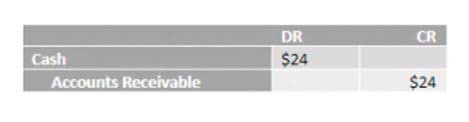
Balance Sheet
It is the amount of expense charged against income for the wear and tear or decline in value of tangible assets over their useful lives like buildings, equipment, vehicles, and machinery. In contrast to tangible assets that physically wear out, intangible assets lose value either because of the expiration of legal rights or by becoming technologically or commercially obsolete. Amortization expense is an important factor in financial reporting because it accurately represents the decreasing value of intangible assets over a period of time. This gives an insight into the actual financial performance of a company regarding the expenses incurred in maintaining and using intangible assets. Amortization is for Intangible assets whereas depreciation is for tangible fixed assets. Examples of intangible assets are copyrights, patents, software, goodwill, etc.

Structure of an amortization schedule
Since no real cash movement occurred in the given period, the company did not incur an actual cash outflow, which the cash flow statement reconciles with the reported cash balance. The amortization of a loan is defined as the gradual reduction in the loan principal via periodic, scheduled payments to the lender, such as a bank. The loan principal is reduced with each incremental loan payment across the borrowing term until maturity, which is tracked using a loan amortization schedule.

- On the balance sheet, the carrying value of the long-term fixed asset (PP&E), or book value, is reduced by the depreciation expense, reflecting the gradual “wear and tear” of the long-term assets.
- Amortization is calculated based on the cost of the asset, its useful life, and its estimated economic value at the end of its useful life.
- Amortization expense is a vital element in financial accounting, reflecting the usage of intangible assets in a business.
- Suppose a company purchased a vehicle for $100,000 with an expected useful life of about five years.
- It’s spreading out the cost of these assets over their useful lives.
- In order to secure the tax deduction, a company must follow the IRS rules while depreciating their assets.
- Fixed asset reconciliation is an important procedure in best practice accounting that guarantees the precision …
The annual depreciation expense you write off each year covers the majority of this loss, with salvage value (or resale value) comprising the remainder. This residual value is not factored into the loss since you can recoup these costs by reselling the resource or property. A business should realize the importance of these two accounting concepts and how much money should be set aside to purchase an asset in the future.